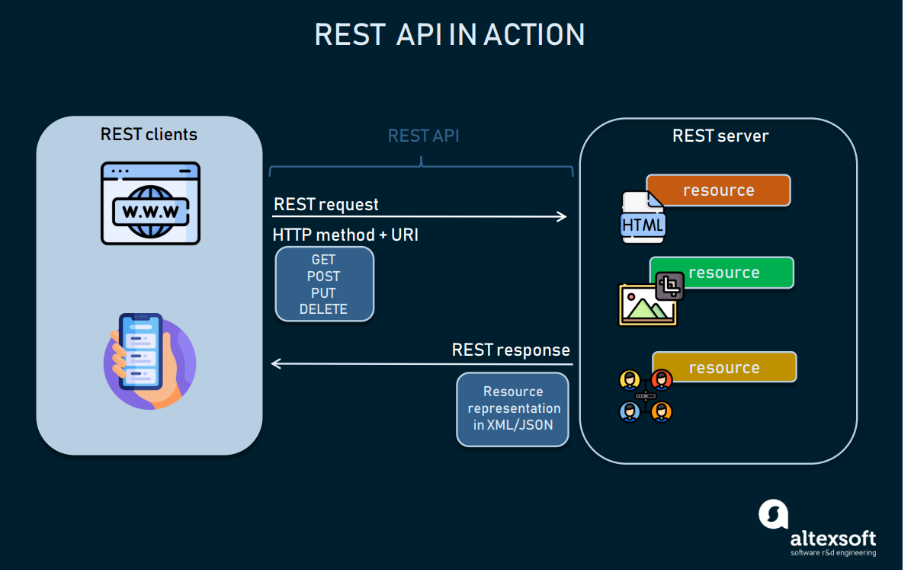
Overview
- Web Services are used for communication and exchanging information betweenapplications.
- In simple words, a service that is available on internet and can be invoked by clientusing some web protocols is called web service.
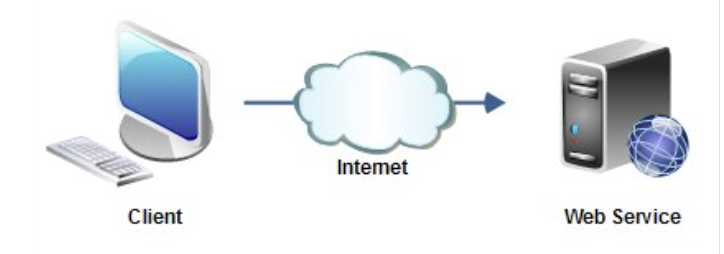
Why Web Service?
- Let’s take one real life example to understand this.
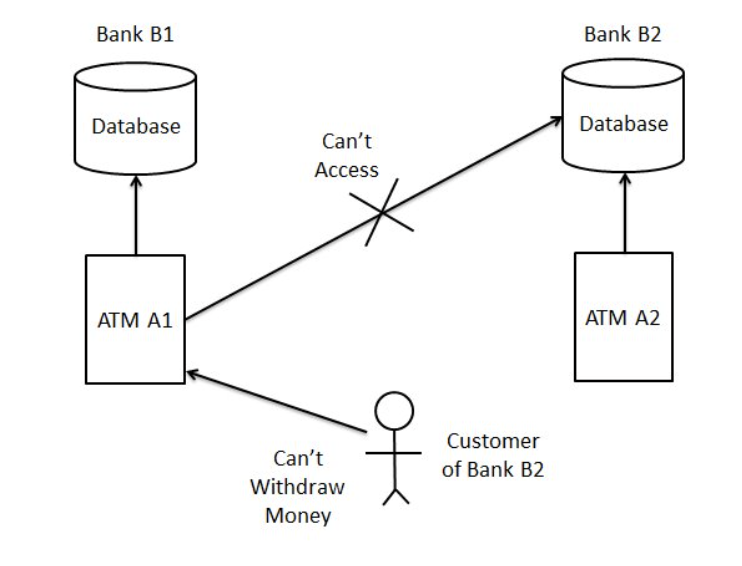
- Suppose there are two ATMs, A1 and A2 of two different banks B1 and B2. These twoATMs are using respective databases for accessing customer’s information. So thecustomer of bank B1 can withdraw money from ATM A1 while customer of bank B2 canwithdraw money from ATM A2.
- Can customer of bank B2 withdraw money from ATM A1? The answer is no. BecauseATM A1 is not authorized to directly access the customer’s information from databaseof bank B2.
This problem can be solved easily using web service. The bank B2 will provide a webservice and using it any other bank’s ATM can access their customer’s information.
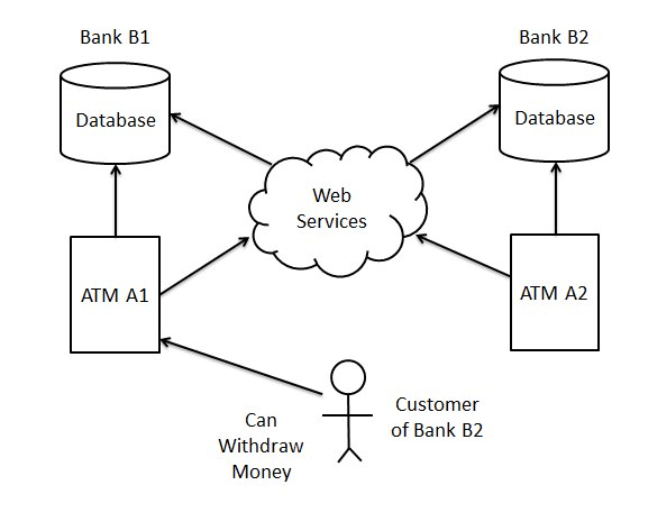
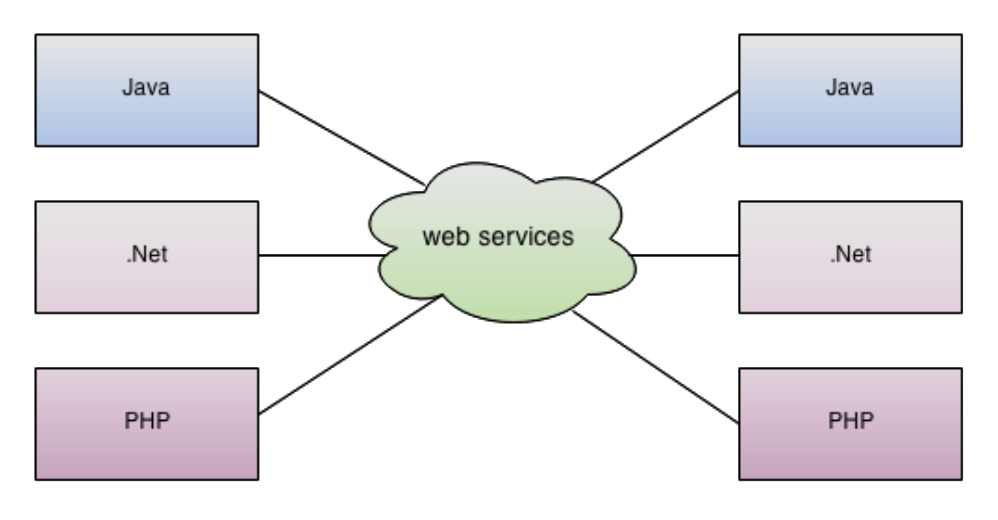
- Using web services, an application running on one platform can communicate withanother application running on different platform.
- Interoperability is the biggest feature of web services.
How is an API being different from a web application?
API
- Purpose: An API is a set of rules and protocols that allows one software application tointeract with another. It defines the methods and data structures that developers canuse to interact with the application, service, or module.
- Usage: APIs are typically used to enable communication between different systems orcomponents, such as between a web application and a backend server, or between twodifferent software services.
- Example: REST APIs, SOAP APIs, and GraphQL APIs are common types that allow foroperations like CRUD (Create, Read, Update, Delete) on resources.
Web Application
- Purpose: A web application is a software application that runs on a web server and isaccessed via a web browser. It is designed to provide interactive and dynamic userexperiences over the internet.
- Usage: Web applications are used to perform tasks, display information, and interactwith users directly through a web interface.
- Example: Examples include online banking systems, e-commerce platforms, socialmedia sites, and content management systems (CMS) like Joomla.
Web vs REST APIs
Web API
- Web APIs are protocols or standards implemented on top of a web server to facilitatecommunication and data exchange over the Internet.
- They are designed to allow software systems to interact with web servers by sendingHTTP (Hypertext Transfer Protocol) requests and receiving responses, typically informats like XML (eXtensible Markup Language) or JSON (JavaScript Object Notation).
Key Features of Web APIs
- Protocol Independent: Web APIs can be built on various protocols such as SOAP(Simple Object Access Protocol), XML-RPC (Remote Procedure Call), or JSON-RPC. Thisflexibility ensures interoperability across different technologies and platforms.
- Stateless: Web APIs are stateless by nature, meaning each request is treatedindependently without relying on any previous interaction or session. This allows forscalability and simplifies the API implementation.
- Wide Range of Operations: Web APIs support various HTTP methods such as GET,POST, PUT, DELETE, etc., allowing developers to perform operations like retrievingdata, creating new resources, updating existing ones, and deleting data.
Advantages of Web APIs
- Interoperability: Web APIs can be consumed by different clients, regardless of theprogramming language or platform used. This makes them ideal for buildingdistributed systems or integrating multiple applications.
- Flexibility: The protocol independence of Web APIs allows developers to choose themost suitable protocol for their specific use case. This flexibility ensures compatibilitywith existing systems and simplifies the integration process.
REST API
- REST (Representational State Transfer) APIs, on the other hand, are a specificarchitectural style for designing networked applications and web services.
- They adhere to a set of principles that define how resources should be identified,requested, and manipulated.
- REST APIs are widely used due to their simplicity, scalability, and ease ofimplementation.
Key Features of REST APIs
- Resource-Oriented: REST APIs treat data as resources that can be uniquely identifiedby a URL (Uniform Resource Locator). Each resource can be accessed and manipulatedusing standard HTTP methods.
- Stateless: Similar to Web APIs, REST APIs are stateless, meaning the server does notstore any client-related context between requests. Each request contains all thenecessary information for the server to process it.
- Uniform Interface: REST APIs follow a uniform interface consisting of key componentslike resource identification, representation, and manipulation. This consistent designsimplifies the understanding and usage of APIs.
Advantages of REST APIs
- Simplicity: REST APIs have a simple and easy-to-understand architecture that makesthem highly accessible for developers. This simplicity ensures faster development andquicker adoption by other applications.
- Scalability: The stateless nature of REST APIs allows them to be easily scaledhorizontally by adding more servers to handle increased load. This scalability is crucialfor applications with high traffic and varying usage patterns.
- Caching: REST APIs support caching mechanisms where responses can be cached atthe client or intermediate servers. This improves performance by reducing the need forrepeated requests to the server.
RESTful APIs
- REST (Representational State Transfer) is an architectural style for designing networkedapplications and web services.
- RESTful APIs adhere to a set of principles that define how resources should beidentified, requested, and manipulated.
- These principles include using HTTP methods, such as GET, POST, PUT, and DELETE, toperform operations on resources represented by URLs (Uniform Resource Locators).RESTful APIs are stateless, meaning that each request is independent of any previousrequests.
- This makes it easy to scale and distribute the workload across multiple servers.
Key Features of RESTful APIs
- Resource-Oriented: RESTful APIs treat data as resources that can be uniquely identified byURLs. Each resource can be accessed and manipulated using standard HTTP methods. Forexample, to retrieve a user’s information, a GET request can be sent tohttps://api.example.com/users/{id}.
- Stateless: RESTful APIs are stateless by design. This means the server does not store anyclient-related context between requests. Each request contains all the necessary informationto process it, making the server more scalable and simplifying the implementation.
- Uniform Interface: RESTful APIs follow a uniform interface consisting of key componentssuch as resource identification, representation, and manipulation. They use standard HTTPmethods and status codes to communicate the intentions and outcomes of the requests.This uniformity makes RESTful APIs easier to understand and consume.
Advantages of RESTful APIs
- Scalability: The stateless nature of RESTful APIs makes them highly scalable. Since theserver does not need to maintain any client-specific information, it can easily handle alarge number of concurrent requests. This scalability is crucial for applications with hightraffic and varying usage patterns.
- Simplicity: RESTful APIs have a simple and intuitive design, making them easy tounderstand and use. The use of standard methods and status codes simplifies theintegration process, allowing developers to adopt and consume the API quickly.
- Caching: RESTful APIs support caching mechanisms, where responses can be cachedat the client or intermediate servers. This improves performance by reducing the needfor repeated requests to the server, making the API more efficient.