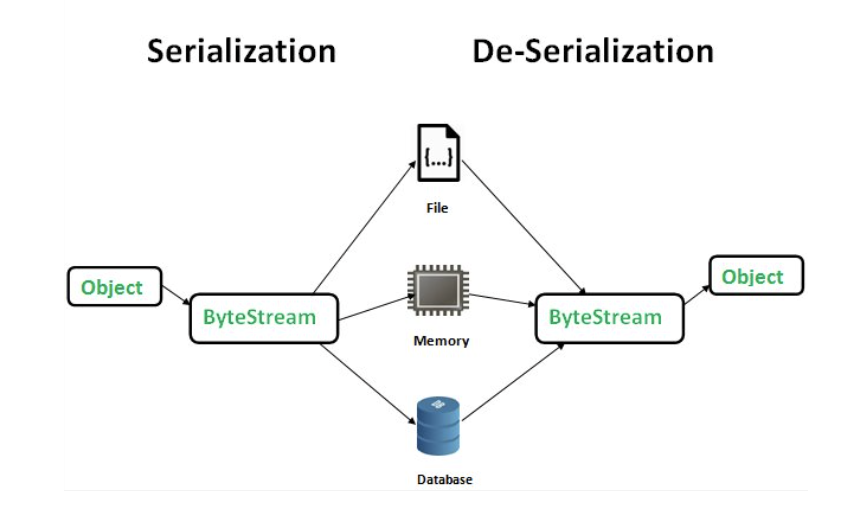
Serialization is a mechanism of converting the state of an object into a byte stream.
Deserialization is the reverse process where the byte stream is used to recreate theactual Java object in memory.
This mechanism is used to persist the object.
import java.io.FileInputStream;
import java.io.FileOutputStream;
import java.io.ObjectInputStream;
import java.io.ObjectOutputStream;

public class SerializationExample {

	public static void main(String[] args) {
		// create User object
		User user = new User(101, "John", "Peter", "Smith", "IT");
		System.out.println(user);

		System.out.println("before serialization...");
		// serialization - write to file
		try (ObjectOutputStream writer =
				new ObjectOutputStream(new FileOutputStream("user.out"))){

			writer.writeObject(user);

		} catch (Exception ex) {
			System.out.println(ex.getMessage());
		}

		System.out.println("before deserialization...");
		// deserialization - reading from file
		try (ObjectInputStream reader =
				new ObjectInputStream(new FileInputStream("user.out"))) {

			// read the object user
			User u = (User) reader.readObject();
			System.out.println(u);

		} catch (Exception ex) {
			System.out.println(ex.getMessage());
		}
	}

}
Advantages of Serialization
To save/persist state of an object.
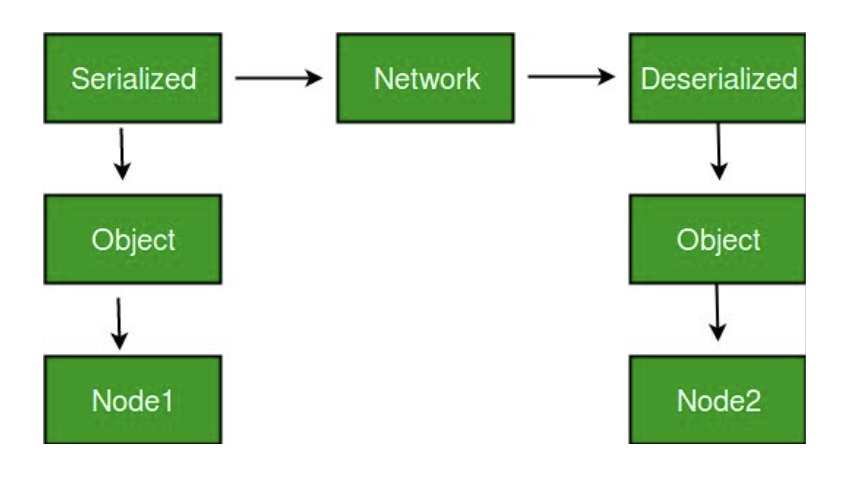
To travel an object across a network.
The transient Keyword
transient is a variables modifier used in serialization.
At the time of serialization, if we don’t want to save value of a particular variable in a file,then we use transient keyword.
When JVM comes across transient keyword, it ignores original value of the variable andsave default value of that variable data type.
transient keyword plays an important role to meet security constraints.
There are various real-life examples where we don’t want to save private data in file.
Another use of transient keyword is not to serialize the variable whose value can becalculated/derived using other serialized objects or system such as age of a person,current date, etc.